Dell · Cables & Hubs
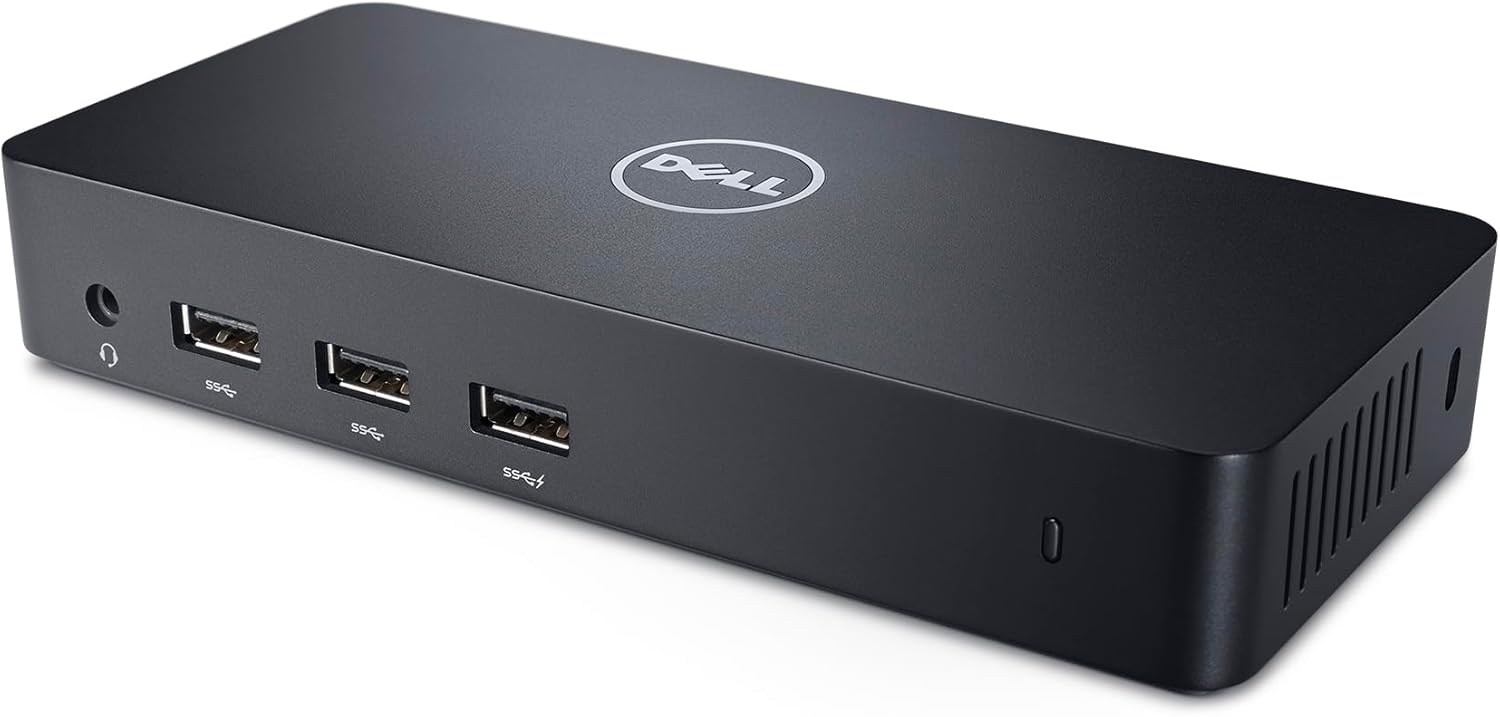
Dell USB 3.0 Ultra HD/4K Triple Display Docking Station D3100
The Dell D3100 adds up to three displays plus practical desktop connections through USB 3.0, but its DisplayLink design and lack of laptop charging require careful compatibility checks.
Best for a permanent desk setupCheck Amazon for current price
Reviewed by SpecVexa Editorial · Updated Sep 6, 2026
Research review — we assess specs, ports, and stated compatibility against the manufacturer listing rather than lab testing, and we never describe hands-on use we have not done. How we review
Check price on Amazon →
Amazon US affiliate link · commission may apply
Pros
- Supports productivity setups with up to three external displays
- Works through USB 3.0 on many computers without modern docking ports
- Combines display, USB, Ethernet, and audio connectivity
- Useful for permanent office and home-office desks
Cons
- Requires compatible DisplayLink software
- Does not charge the connected laptop
- Less suitable for high-refresh gaming or latency-sensitive graphics
- Available display modes depend on the computer and configuration
Bottom line
The Dell D3100 is a practical way to turn a compatible USB 3.0 laptop into a multi-monitor workstation without replacing the computer. It is best for office applications, research, messaging, and other productivity tasks—not high-refresh gaming or buyers expecting one-cable USB-C charging.
Buy this if
- Your laptop has USB 3.0 but lacks enough native display outputs for a multi-monitor desk.
- You want up to three external displays for documents, spreadsheets, browser windows, or communication tools.
- Your setup needs display, USB, wired networking, and audio connections consolidated at the desk.
- You are comfortable installing and maintaining DisplayLink software.
Skip if
- You need the dock to charge your laptop through the same cable.
- You want high-refresh gaming, color-critical creative work, or the lowest possible display latency.
- Your employer blocks driver installation or your operating system lacks suitable DisplayLink support.
- You only need one monitor and a couple of USB ports, since a simpler hub may be easier to manage.
Bandwidth and power budget
A cable or hub does not add capability to your laptop — it carries, or divides, what a single port already has. Read this section as a budget you are spending, not features you are gaining.
What this listing states
- 4K or higher stated — listedCheck whether the listing says 4K at 60Hz or only 30Hz — 30Hz is visibly choppy for desktop work.
- Ethernet — listedWorth it for stable calls and big transfers, and it shares the same lane as everything else on the hub.
- HDMI video — not listedOnly works if the host port itself carries video. No adapter can create a display signal that is not there.
- Charging wattage stated — not listedTells you whether it can keep the laptop charged through the same port it occupies.
- Card reader — not listedSaves carrying a separate reader if you shoot photo or video.
- Thunderbolt or USB4 — not listedThe high-bandwidth tier — needed for dual displays or fast external storage, and only useful if your laptop has it too.
Budget the one port you are giving up
- Video only works if your laptop's USB-C port supports DisplayPort Alt Mode. No hub can add it.
- 4K at 60Hz needs roughly twice the bandwidth of 4K at 30Hz; inexpensive hubs often list only 30Hz in the fine print.
- Pass-through charging typically loses 10–15W to the hub, so size your charger above your laptop's rating.
- Running an external display, gigabit Ethernet, and fast storage at once will slow at least one of them down.
- For cables, length costs signal: long HDMI and USB-C runs may quietly drop to a lower resolution or speed.
Listed items come from this product's own Amazon listing. An unlisted item is one the manufacturer does not mention — it may still be present, so confirm on the listing before buying.
Full review
Performance & everyday use
The D3100's main advantage is its ability to drive multiple displays over a standard USB 3.0 connection. That remains useful for older business laptops and compact systems with limited video outputs. Dell markets it as a triple-display dock with Ultra HD/4K support, although the resolution and refresh rate available depend on the selected output, monitor arrangement, computer, drivers, and operating system. Verify the current Amazon listing and Dell documentation for your intended configuration.
Because the dock relies on DisplayLink technology, its behavior differs from a direct DisplayPort or HDMI connection. DisplayLink compresses and transports video over USB, which is generally responsive enough for email, office software, web browsing, dashboards, and conventional video calls. Rapid animation, games, and demanding video workflows can reveal more latency or consume additional system resources. Protected streaming content may also behave differently depending on the service, browser, and display chain.
The integrated USB, Ethernet, and audio connectivity can reduce cable swapping when returning to a fixed desk. Performance is still shared across the dock's single upstream USB connection, so simultaneous display activity and heavy data transfers may compete for bandwidth.
Build, comfort & setup
The black enclosure has a compact, business-oriented design that fits naturally beside a monitor or behind a laptop stand. Its desktop format is less travel-friendly than a small USB hub, but the larger body helps keep connected cables organized.
Setup is not always plug-and-play. Install the appropriate DisplayLink software, connect the dock directly to a suitable USB 3.0 port, and then configure display arrangement in the operating system. Corporate laptops may require administrator approval. This is also an older USB-A-era design: it does not replace the laptop's power adapter, and a USB-C adapter does not automatically guarantee full compatibility.
Value & alternatives
The D3100 makes the most sense when extending the useful life of a laptop that has USB 3.0 but limited monitor connectivity. Its broad desktop connectivity can be more convenient than combining several separate adapters, particularly for a permanent office setup.
A basic USB hub is a better value if additional peripherals are your only concern. For a newer laptop with USB-C or Thunderbolt, a native dock with charging and direct video output will usually provide a cleaner one-cable setup and may be better suited to demanding displays. Check Amazon for the current price, then compare it with docks designed specifically for your laptop's ports and charging requirements.
Verdict
The Dell D3100 is still worth considering for productivity-focused triple-monitor desks built around compatible USB 3.0 computers. Its port selection and DisplayLink flexibility solve a real connectivity problem, but mandatory software, shared USB bandwidth, and no laptop charging keep it from being the best universal docking option.
How it compares to our other picks
| Pick | Type | HDMI | Ethernet | SD/TF | PD charging | Rating | Best for |
|---|---|---|---|---|---|---|---|
| Dell USB 3.0 Ultra HD/4K Triple Display Docking Station D3100This review | Docking station | — | ✓ | — | — | ★ 4.4 | A permanent desk setup |
| Dell Pro Dock WD25Z USB-C Docking Station with 180W Adapter | Docking station | — | — | — | ✓ | ★ 4.9 | A permanent desk setup |
| Dell HD22Q Dual Monitor Docking Station with Wireless Charging Stand | Docking station | ✓ | — | — | — | ★ 4.4 | A permanent desk setup |
| Dell DA300 USB-C Mobile Adapter | Cable | ✓ | ✓ | — | — | ★ 4.4 | Everyday connections |
✓ = listed by the manufacturer. — = not listed (may still be present). Specs reflect current listings; confirm details and price on Amazon.
Related reviews
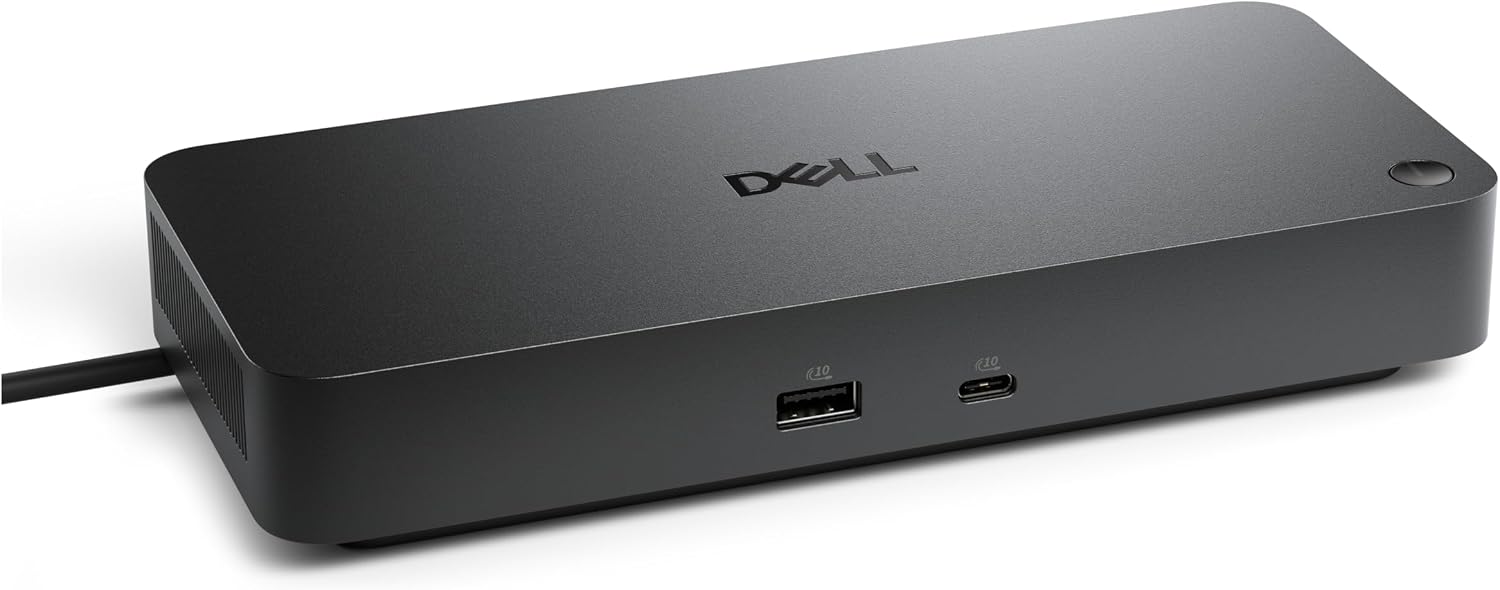
Dell Pro Dock WD25Z USB-C Docking Station with 180W Adapter
A business-focused USB-C dock for simplifying a Dell laptop desk setup. Its main appeal is single-cable convenience, but port and charging compatibility need verification.
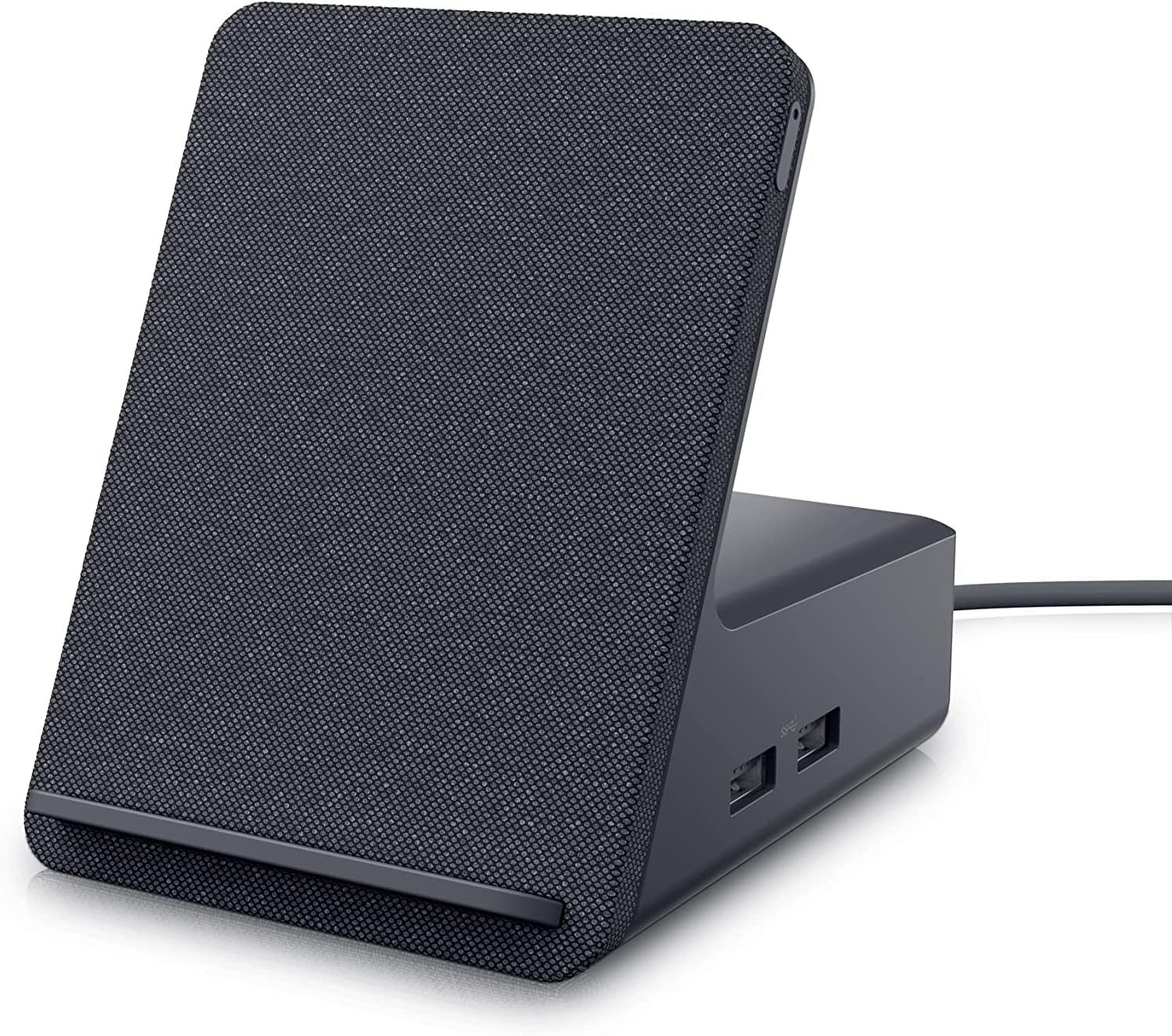
Dell HD22Q Dual Monitor Docking Station with Wireless Charging Stand
The Dell HD22Q combines dual-monitor connectivity, USB-C docking, and a wireless phone-charging stand in one tidy desktop hub. Its appeal depends heavily on laptop compatibility.
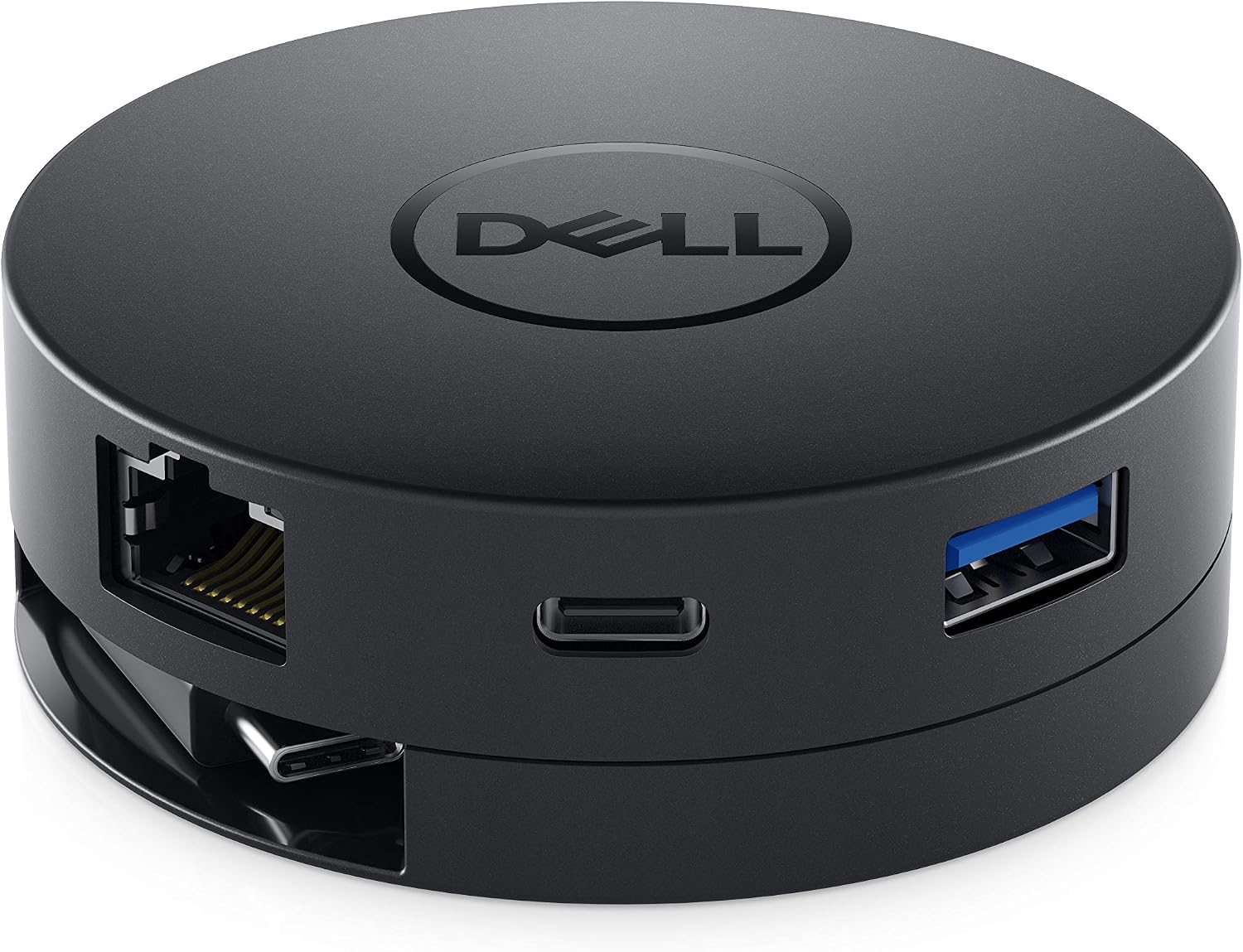
Dell DA300 USB-C Mobile Adapter
A compact USB-C travel adapter with modern and legacy display connections, USB expansion, and wired networking. Best for single-screen presentations and mixed office hardware.
Dell USB 3.0 Ultra HD/4K Triple Display Docking Station D3100
Best for a permanent desk setup